https://www.which.co.uk/news/article/electoral-commission-falls-victim-to-cyberattack-is-your-data-affected-axQ170e852uK?utm_medium=email&utm_source=engagingnetworks&utm_campaign=supporters&utm_content=Scam+alert+100823+-+A+(electoral+commission)
Scams of any type.
Post scams of any type. If it is not from personal experience, check its veracity if you can; Snopes.com is a good reference. I shall be posting IT scams as I become aware of them, and you of course, can do the same.
Open Loop 75
-
The latest wonder box - with, of course, 50% discount
First, magical heaters, now magical coolers. This is one of the magical air-conditioners available. This link will show that there are continually only 11 available, while in the bottom left-hand corner, they are selling like hotcakes. You can use the cooler so you can eat them.
https://bit.ly/3OC67u6 -
A product's imaginary buyers, and how to see the list
This device has the usual 50% off, and is selling rapidly. The imaginary buyers are produced from the computer code which displays the webpage. To see the code and the list, right-click the page below, and select 'View page source', then go down to line 2274 on the left. Then click anywhere along that line, then press and keep pressed the right arrow to travel along the line to see them.
https://bit.ly/3DLk16B -
They pose as middlemen for insurance companies, claiming they can offer you significantly cheaper prices for well-known companies.
To do this they forge insurance documents, falsify your details to bring the price down, or take out a genuine policy then cancel it soon after.
Leaving you uninsured.
Check with the insurance company directly to verify the broker’s details. -
Preventing WhatsApp, email, phone impersonation scams
These scams can be prevented by asking a question that only the person would know the answer to.
-
Describing just some of the scams you may see. Fraudsters pretending to be them
https://www.royalmail.com/help/scam-examples
It gives detail of how to report the scams, which I have just done, having received a text that is false -
New Email (Edited)
Look at this email I just received ......
I am a professional hacker and have successfully managed to hack your operating system.
Currently I have gained full access to your account.
In addition, I was secretly monitoring all your activities and watching you for several months.
The thing is your computer was infected with harmful spyware due to the fact that you had visited a website with porn content previously.
╭ ᑎ ╮
Let me explain to you what that entails. Thanks to Trojan viruses, I can gain complete access to your computer or any other device that you own.
It means that I can see absolutely everything in your screen and switch on the camera as well as microphone at any point of time without your permission.
In addition, I can also access and see your confidential information as well as your emails and chat messages.
You may be wondering why your antivirus cannot detect my malicious software.
Let me break it down for you: I am using harmful software that is driver-based,
which refreshes its signatures on 4-hourly basis, hence your antivirus is unable to detect it presence.
to be continued......... -
Warning issued to WhatsApp users over account takeover scam
Link to WhatsApp scam posted in Anything loop:
http://bit.ly/42OyqucThis discussion is now closed.
-
The WhatsApp 'my phone's broken, I need help' scam is now happening in phone calls. All scammers need is a voice sample of as little as 30 seconds, they can then get the voice to say anything they wish, even with feeling. This has started in North America, and victims have so far lost £9m.
-
Dear resident,
When you’re buying online, how confident are you that you’re dealing with a genuine seller and not a criminal? Or do you even think about it?
Many people believe that online shopping scams are easy to spot, with poor spelling or grammar, dodgy logos or unusual website or email addresses or phone numbers. However, this is now rarely the case, with scammers going to great lengths to earn your trust before cheating you out of your money. It’s upsetting at the best of times, but even worse when money’s tight.
Whether you're buying a car, clothes, or gifts online, help to safeguard yourself and your money by watching Get Safe Online's latest short video and reading on to discover our top tips:
https://www.getsafeonline.org/onlinebuying/?videoname=emily
With kind regards,
the Get Safe Online team -
Received an email allegedly from Microsoft saying my account will soon be suspended.
When I googled hlj,com it came up as hobby link Japan. -
This discussion is now closed.
-
This discussion is now closed.
-
So looked online and found this
https://www.independent.co.uk/news/uk/home-news/car-park-payment-scam-code-b2224586.html -
Had an email purporting to be from Santander which said I needed to provide a mobile number before 23rd January and, of course, there was a link to my supposed details.
The strange thing was it came to a very old address which I very rarely use except for a few newsletters and it quoted my sister's name and a part of her postcode, both of which were correct.
I thought maybe a long time ago I had used that email address to register her but I don't remember doing so and she says she has never had an account with them.
The email seems to have come from someone using a Talk Talk account. My husband had a similar email, also via Talk Talk. -
Stay safe from scammers this holiday season by getting to know their most common scams:
Order Confirmation Scams. These are unexpected calls/texts/emails that often refer to an unauthorised purchase and ask you to act urgently to confirm or cancel the purchase. These scammers try to convince you to provide payment or bank account information, install software to your computer/device, or purchase gift cards.
Remember, if you received correspondence regarding an order you weren't expecting, you can verify orders by logging into your Amazon account. Only legitimate purchases will appear in your order history - and Customer Service is available 24/7 to assist.
Tech Support Scams. Scammers create fake websites claiming to provide tech support for your devices and Amazon services. Customers who land on these pages are lured to contact the scammer and fall prey to their schemes.
Remember, go directly to the help section of our website when seeking help with Amazon devices or services. If you do use a search engine, use caution. Legitimate Amazon websites contain "amazon.com" such as "amazon.com/support".
Here are some important tips so that you can identify scams and keep your account and information safe:
Trust Amazon-owned channels. Always go through the Amazon mobile app or website when seeking customer service, tech support, or when looking to make changes to your account.
Be wary of false urgency. Scammers may try to create a sense of urgency to persuade you to do what they're asking. Be wary any time someone tries to convince you that you must act now.
Never pay over the phone. Amazon will never ask you to provide payment information, including gift cards (or “verification cards”, as some scammers call them) for products or services over the phone.
If you receive correspondence you think may not be from Amazon, please report it to us. For more information on how to stay safe online, visit Security & Privacy on the Amazon Customer Service page. -
Dear DEREK
There are various banking scams at the moment, such as from HSBC and Santander. 'Which' magazine has advised that the fake HSBC text directs customers to call a fraudulent helpline - hoping to trick HSBC customers into giving away sensitive details. These texts display ‘PASSCODE’ as the sender and attempt to capitalise on security checks known as ‘strong customer authentication’ (SCA). An example of this text reads: ‘HSBC: Your OTP is 429384 for a payment of 850.00 GDP to EXPEDIA – REF: HS9X. If this wasn’t you, call us immediately on 0330 828 1274. If you call the number you will hear an automated recorded message or interactive voice response asking you to input your branch sort code and 15-digit card number or customer identification number before being supposedly put through to an adviser. Don't do it!
The previous Carphone Warehouse scammers have now realised that this name no longer exists and are using Currys/PC World to phone residents. Be wary of any unexpected calls saying that they are from Currys/PC World.
I am attaching a document which gives good advice on how to protect yourself when purchasing products online, especially leading up to Christmas. Also the Parcel Delivery scams will no doubt increase.
Regards
David
PS Thanks to our colleagues in Berkshire for the above detaills
Attachments
Neighbourhood Watch Flyer 2.0 (2) FINAL.pdf - 74.3 KB
Message Sent By
David Alder (NWN, Area Representative, Thames Valley, South Buckinghamshire (East))
************************************************
The text from the Neighbourhood Watch Flyer 2.0 (mentioned above) is reproduced below:
Computer and mobile device users can be at risk of being hacked, scammed, and phished, but when the Christmas holidays arrive, which means more time spent online shopping and browsing, crooks really have an opportunity to cause some mischief.
They’re hacking consumers using sophisticated phishing attacks that attempt to trick people into giving up their personal information, including bank account details or credit card data.
Follow these tips to help protect yourself during the holiday season.
Watch out for deals that are too good to be true
Black Friday deals have convinced the world that insane discounts are to be expected leading up to Christmas or in the sales.
Amazing discounts and promotions – delivered via email, text message, or an opportune pop-up window on the Web – may lead you to bogus ecommerce sites strictly designed to separate you from your credit card number. Order the merchandise promised, and it may never come – but you’ll be charged for it (and more) just the same.
Be extra vigilant when shopping for Christmas. Some deals sound too good to be true because they are. They could be outright scams.
Computer and mobile device users can be at risk of being hacked, scammed, and phished, but when the Christmas holidays arrive, which means more time spent online shopping and browsing, crooks really have an opportunity to cause some mischief.
They’re hacking consumers using sophisticated phishing attacks that attempt to trick people into giving up their personal information, including bank account details or credit card data.
Follow these tips to help protect yourself during the holiday season.
Watch out for deals that are too good to be true
Black Friday deals have convinced the world that insane discounts are to be expected leading up to Christmas or in the sales.
Amazing discounts and promotions – delivered via email, text message, or an opportune pop-up window on the Web – may lead you to bogus ecommerce sites strictly designed to separate you from your credit card number. Order the merchandise promised, and it may never come – but you’ll be charged for it (and more) just the same.
Be extra vigilant when shopping for Christmas. Some deals sound too good to be true because they are. They could be outright scams.
Double-check website domain names
Phishing is most effective when a scammer is pretending to be a brand you know and trust. A high-quality but phony store hawking well-known or highdemand products is likely to look almost identical to the real thing – so be vigilant in looking for signs that reveal its true colours.
For example, inspect logos, email address headers, and the text and content of messages before clicking anything.
Make sure merchant websites are secure
In recent years, websites have been moving from HTTP to HTTPS, a communication system that encrypts all traffic between users and the websites they visit, which can dramatically improve security against certain types of attacks.
It’s easy to tell whether a website is not secured with HTTPS. All major web browsers indicate this with an icon to the left of the site’s URL. The icon is a lowercase “i” with a circle around it on Microsoft Edge and Firefox; Google Chrome also notes “Not secure” on insecure sites.
HTTPS (with S on the end) is a secure protocol because it includes encryption and authentication, which keeps the information shared between your computer and the website private.
HTTPS might not be as important if you’re visiting your neighbour’s blog, but it is if you’re on a site where you plan to buy something, where you need to provide your payment card credentials, your address, and log in with your username and password.
Instead of, or next to, the lowercase “i” icon on every browser, look for a locked padlock icon on retail sites that shows they are using the most current security mechanisms, indicating that your shopping sessions are encrypted and secure.
Remember to be patient
When you’re in a rush to complete your shopping as quickly as possible, it is natural that you might miss something. Take a breath and slow down. Cyberthieves often prey upon people’s poor cyber habits or attempt to trick you with phishing messages designed to make you panic – such as warnings about a delayed package or a credit card purchase that didn’t go through. Just as a big discount might be too good to be true, an urgent warning might be too dramatic to be taken at face value. -

Great Notley Enchanted Forest event (Edited)
Beware, this is a scam; there is no such event. If you have paid by credit or debit card, contact your bank.
http://bit.ly/3gqKs9Q -
Visa Card (Edited)
Just had a call to 'Dear Customer', from the Fraud Department of Visa, to say that a payment had just been made for £900 to an online shopping account and to press 1 if it wasn't me. I'm assuming it is a scam and just cut off.
I've 'who called my number' and number has not been mentioned before. The number was 02083125755 -
I have had an email that says it is a whatsapp voice message and click on to listen, I have nothing to do with whatsapp.
Is this a scam and something I should not click on ? -
Berkshire National Cash for Homes
An email asking me to click the link to see the possible buyers.
I'm not actually selling my home! -
Selling scams - behind the scenes - Part 3
The magical money-saving boxes and other products that you see advertised may contain TrustPilot reviews and Facebook-like posts recommending the product. These reviews and posts can be fictitious, also the site advertising them may benefit financially from your purchase/interest.
The following is from the Top Gadget Trending website:
'MARKETING DISCLOSURE: This website is a market place. As such you should know that the owner has a monetary connection to the product and services advertised on the site. The owner receives payment whenever a qualified lead is referred but that is the extent of it.
ADVERTISING DISCLOSURE: This website and the products & services referred to on the site are advertising marketplaces. This website is an advertisement and not a news publication. Any photographs of persons used on this site are models. The owner of this site and of the products and services referred to on this site only provides a service where consumers can obtain and compare.'
Remember, the only thing magical about these devices, is that they get people to part with their money. -
Selling scams - behind the scenes - part 2 (Edited)
When you visit a selling website, you may see a pop-up box in the bottom left-hand corner of the screen which displays a recent purchaser of the product. This is fictitious, and is produced by the programming behind the webpage. To see the program that displays any webpage, right-click on the page, and select 'view page source'. If you do this for the WiFi Blast (magic box!) website, when the programming appears, go down to line number 743 shown on the left. This is the start of the imaginary purchasers. First list is forenames, then the surname initial, and then the location.
The program then selects combinations of the forenames, initials and locations.
https://bit.ly/3d1JD5H -
Behind the scenes of selling scams - Part 1 (Edited)
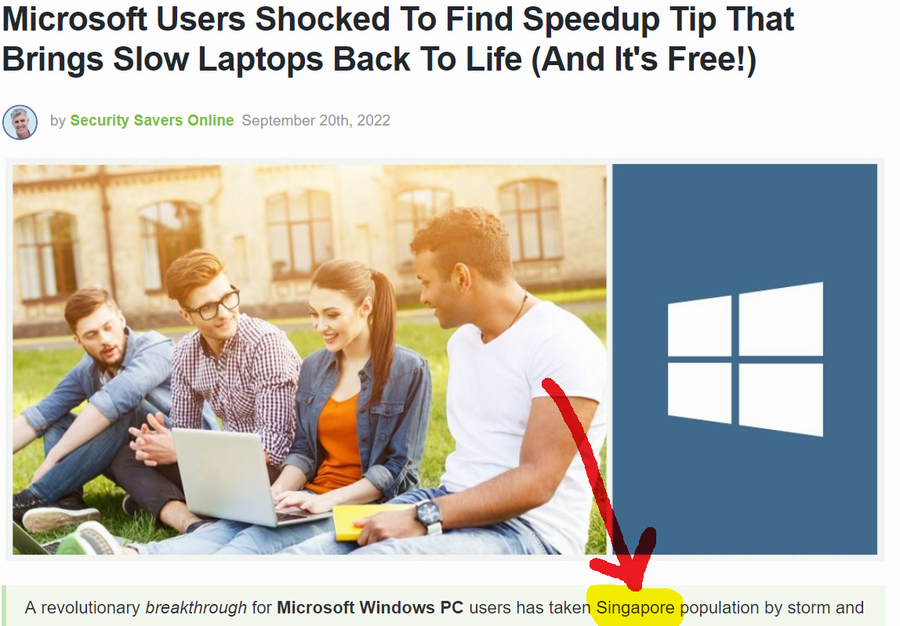
When you connect to a website, not only does it know where you are (or where you are pretending to be!), it also knows what your computer operating system is (Windows etc.), and the web browser you are using.
Below is a website that offers to revive your PC. Due to an error in their programming, it may show that you are in Germany, but if you are in another country, it will show that. I changed my location to Singapore, and you can see the result in the attached image.
The date at the top of the page will always be the current date, and of course, the offer's availability is limited: 'Updated September 2022: Whilst it’s unknown how long this free offer will remain available, we anticipate it to expire soon so we strongly encourage all of our readers to claim their copy today to avoid disappointment.' This date will also change whenever it is viewed.
Should you click any of the links, you may find that they are no longer available.
Are you shocked!?
https://bit.ly/3f5zrcP -
Yet another magical plug-in box (Edited)
Now the cold weather is here, adverts are appearing for cost-saving magical heating devices. Sellers of all these wonderful devices all use the same selling techniques; ignore all such devices.
https://bit.ly/3dlJSZk -
https://www.which.co.uk/news/article/notorious-hi-mum-and-dad-scam-spreads-from-whatsapp-to-text-message-an7N34c0gVbP?utm_medium=email&utm_source=engagingnetworks&utm_campaign=scam_alert&utm_content=Scam+Alert+150922.
-
Which --- Premium rate numbers
https://www.which.co.uk/consumer-rights/advice/premium-rate-number-scams-ay3uY7c0jtju?utm_medium=email&utm_source=engagingnetworks&utm_campaign=scam_alert&utm_content=Scam+Alert+010922+C
-
Fake Microsoft Office in the post
This scam is extremely rare at the moment due to the cost. They typically target wealthy people.
The scam is the start of an attempt to infect your computer. An official looking package contains a USB keydrive with the office logo, and a product key to install Office professional plus. Plugging this in will result in a message being displayed to inform you that your computer has been infected, and to call the support line for help. -
Another wondrous plug-in box - not! (Edited)
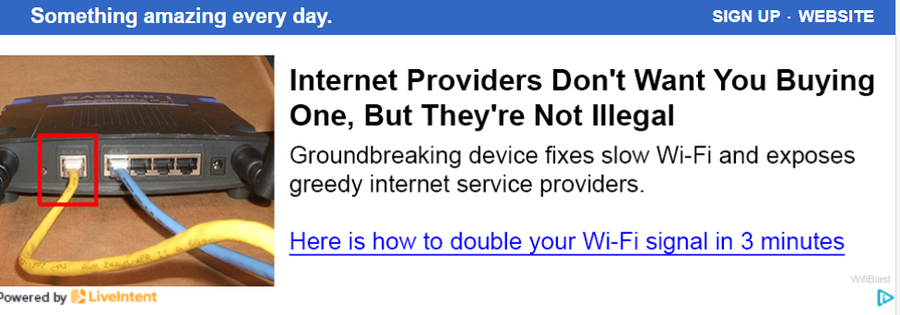
When surfing the web, you will see adverts for wondrous devices that will do things that your energy supplier/ internet provider does not want you to know about! One that you may know about, is the magical plug-in box that will save up to 95% of your electricity bill! This one will speed up your Internet (Internet suppliers don't want you buying one!). Attached is the advert for this product. Here is the sales pitch website: https://bit.ly/3B8KtFE
Here is an extract:
“You didn’t get this from me, man,” he said. “It’s a WiFiBlast. It reconnects the split channels from your router and blasts it across the house. Trust me, man, you’re not gonna have any troubles with speed anymore.”
Nearly speechless because of this internet angel, I thanked Barry for his amazing gift. He only had one thing to say:
“Thanks for the beer, man.”
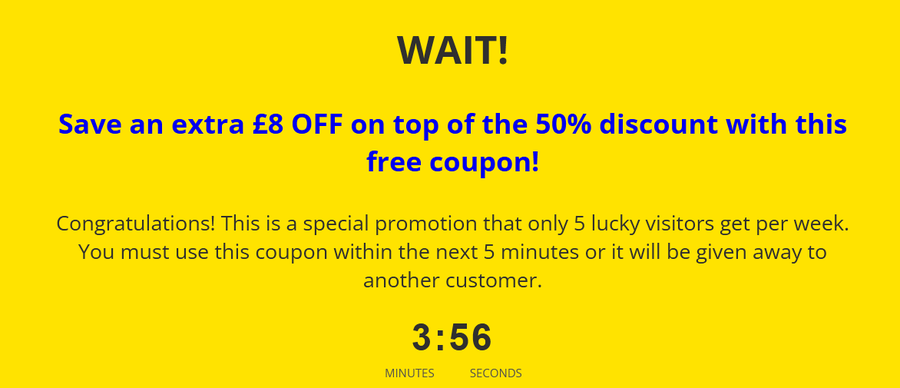
This leads you to the website where you can purchase the device: 'Stock is extremely limited: Sell Out Risk: HIGH', and you can get up to 50% off! Wonder of wonders, a window with a countdown pops (see attached image) up offering you, as one of 5 lucky people this week, even more money off!
The website selling the product has the usual box popping up bottom left of the screen, telling you who has just bought one, and where they live: https://bit.ly/3d1JD5H
Whenever you see something like this, just google the product, including scam in the search. -
Sim-swap scam (Edited)
From my bank:
'A sim-swap scam happens when a criminal obtains enough information to pose as you (Facebook!) and uses it to trick your mobile network provider into transferring your phone number to a sim card in their possession.
Gaining control of your mobile number allows a fraudster to receive all calls and texts intended for you – including the one-time security passcodes for online banking. It also allows them to intervene if we try to contact you to warn you about suspicious activity on your account.
If you ever notice anything unusual such as sudden changes in service or unusual messages from your provider, call them immediately using a trusted number from their website to check there is nothing untoward happening. The quicker you react, the quicker you can stop them in their tracks!' -
https://www.which.co.uk/news/article/scam-alert-watch-out-for-this-fake-emirates-holiday-whatsapp-giveaway-azQJq5t3HdU9?utm_medium=email&utm_source=engagingnetworks&utm_campaign=scam_alert&utm_content=Scam+Alert+110822+B
-
Ghost brokers (Edited)
https://www.which.co.uk/news/article/beware-the-cheap-car-insurance-thats-too-good-to-be-true-az5lP4w5Yqrl?utm_medium=email&utm_source=engagingnetworks&utm_campaign=scam_alert&utm_content=Scam+alert+020722+A
-
https://www.which.co.uk/news/article/watch-out-for-this-new-revolut-text-scam-aMOPV9m1xlpH?utm_medium=email&utm_source=engagingnetworks&utm_campaign=scam_alert&utm_content=Scam+Alert+040822+B
-
Scammers are buying people's Facebook data for as little as 16p. The BBC recently bought the data of 1000 people. The data is used to commit identity theft. Never put any personal information on Facebook, such as names, email and home address, or your date of birth. Also, don't post your holiday photos while you are on holiday; you might just as well hang up 'Burgle me' on your house.
-
Covid scam. Tooting church has £140,000 stolen leaving just £1 left in bank account
https://bit.ly/3vl7QK9
-
Norton nasty email. (Edited)
Just had an email from something called info@hybridfabric.net
saying my email address has been reported several times as a trojan virus spreader.
Then it says to get Norton antivirus. -
https://www.which.co.uk/news/article/watch-out-for-these-latest-paypal-email-scams-a2N390y0TXXH?utm_medium=email&utm_source=engagingnetworks&utm_campaign=scam_alert&utm_content=Scam+alert+140722+B
-
Wellbeing Centre - scam - 02033322616
Just had a call from a guy with a very strong accent asking me about my arthritis. He said I'd spoken to him about it last year and he was wondering how it was.
Total scam. I don't have arthritis (yet). -
Avoiding scam calls, texts, and emails. You will find lots of information in this loop. Here are the basics:
Landline telephone scams can be avoided by screening calls if you have an answering machine, or getting a call blocker telephone. By call screening, I have not had one scam call for many years. A withheld number caller has never left a message!
Due to scammers using telephone number creating software, they can display any number they wish on your phone.
Never click a link in a text message unless you are sure who it is from and why you would have it sent to you. If in doubt, check by contacting the sender directly.
Emails: Check the sender's address and do not click any links unless you are expecting the email to verify the opening of a new on line service/account for example. -
Energy scam incl. refunds, owing and more
https://www.which.co.uk/news/article/7-energy-scams-to-watch-out-for-a7hWE2O98VCm