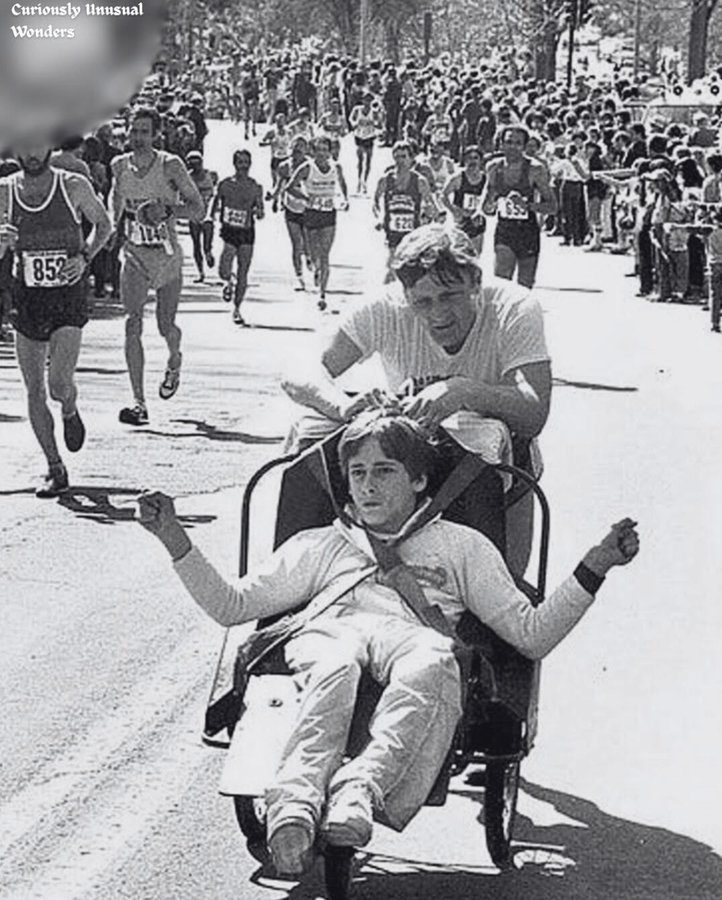

Team Hoyt
In 1977, a 15-year-old boy asked his father a question that would change both of their lives—and eventually inspire millions around the world.
The boy was Rick Hoyt.
Rick had been born with cerebral palsy, a neurological condition that affected his ability to control his muscles and speak clearly. Doctors initially told his parents that their son would never communicate, never live independently, and might never understand the world around him.
Many families in the 1960s were advised to place children with severe disabilities into institutions.
But Rick’s parents refused.
His father, Dick Hoyt, and his mother Judy believed their son deserved the same chance at life as anyone else. They fought to include him in school, pushing against systems that often excluded children with disabilities.
Eventually engineers at Tufts University developed a computer interface that allowed Rick to type by moving his head against a switch. For the first time, he could communicate his thoughts.
And one day, in 1977, he typed something simple.
He wanted to participate in a charity race for a classmate who had been paralyzed in an accident.
Rick asked his father:
“Dad, can we run in that race?”
Dick Hoyt had never run competitively. At 36 years old, he considered himself out of shape and had no training in endurance sports.
But when his son asked, he didn’t hesitate.
“Yes,” he said.
The Race That Started Everything
The race was about five miles long. Rick sat in a wheelchair while Dick pushed him from behind.
They finished near the back of the pack.
There were no cameras waiting for them. No headlines. No celebration.
But that night something remarkable happened.
Rick typed a message to his father.
“Dad, when I’m running, it feels like I’m not handicapped.”
For Dick, those words changed everything.
He realized that when they ran together, Rick experienced a freedom that everyday life rarely gave him.
So Dick decided they would keep running.
The Birth of Team Hoyt
Over the next four decades, the father and son became known around the world as Team Hoyt.
They didn’t just participate in races.
They conquered some of the most demanding endurance challenges on earth.
Together they completed more than 1,100 races, including:
• 32 Boston Marathons in Boston Marathon
• Multiple triathlons
• 6 Ironman competitions in Ironman World Championship
An Ironman is one of the most grueling athletic events in the world.
It requires athletes to complete:
• a 2.4-mile swim
• a 112-mile bike ride
• a 26.2-mile marathon
Team Hoyt completed these races together.
Dick would swim while pulling Rick in a specially designed raft.
He cycled with Rick seated on a custom-built bicycle attached to the front.
Then he pushed Rick’s wheelchair for the marathon.
For hours.
For miles.
For years.
What made their story powerful wasn’t just the physical effort.
It was the message behind it.
At a time when many people still believed individuals with severe disabilities could not participate in sports or public life, Team Hoyt proved otherwise.
Crowds began recognizing them.
Spectators would cheer as the father pushed his son toward the finish line. Runners who had once competed only for time or medals found themselves inspired by something deeper.
The Hoyts weren’t racing against other athletes.
They were racing against assumptions.
Against the belief that disability meant limitation.
Against the idea that inclusion was impossible.
And mile after mile, they proved it wrong.
The Heart Behind the Strength
People often asked Dick how he managed to do something so physically demanding.
He always gave the same answer.
“I’m just lending Rick my arms and legs. He’s the one with the heart.”
Rick saw it differently.
“He was my motor,” he once said.
“I was his heart.”
Together they became something greater than either of them alone.
A team.
Over the years, their story inspired countless people with disabilities and their families to pursue sports, education, and independence.
They became symbols of what inclusion could look like when barriers were removed.
Their journey lasted decades.
Dick Hoyt passed away in 2021 at the age of 80.
Rick followed in 2023 at the age of 61.
Today they rest side by side.
But their message continues to move forward through every athlete who refuses to be limited by someone else’s expectations.
The Lesson That Still Runs
The story of Team Hoyt was never really about winning races.
It was about what happens when one person believes in another so deeply that they refuse to accept limits.
A father who became his son’s strength.
A son who became his father’s purpose.
And a simple promise that echoes long after their final finish line:
Yes, you can.
Not because the road is easy.
Not because the world is fair.
But because sometimes love is strong enough to carry both of you forward.
The boy was Rick Hoyt.
Rick had been born with cerebral palsy, a neurological condition that affected his ability to control his muscles and speak clearly. Doctors initially told his parents that their son would never communicate, never live independently, and might never understand the world around him.
Many families in the 1960s were advised to place children with severe disabilities into institutions.
But Rick’s parents refused.
His father, Dick Hoyt, and his mother Judy believed their son deserved the same chance at life as anyone else. They fought to include him in school, pushing against systems that often excluded children with disabilities.
Eventually engineers at Tufts University developed a computer interface that allowed Rick to type by moving his head against a switch. For the first time, he could communicate his thoughts.
And one day, in 1977, he typed something simple.
He wanted to participate in a charity race for a classmate who had been paralyzed in an accident.
Rick asked his father:
“Dad, can we run in that race?”
Dick Hoyt had never run competitively. At 36 years old, he considered himself out of shape and had no training in endurance sports.
But when his son asked, he didn’t hesitate.
“Yes,” he said.
The Race That Started Everything
The race was about five miles long. Rick sat in a wheelchair while Dick pushed him from behind.
They finished near the back of the pack.
There were no cameras waiting for them. No headlines. No celebration.
But that night something remarkable happened.
Rick typed a message to his father.
“Dad, when I’m running, it feels like I’m not handicapped.”
For Dick, those words changed everything.
He realized that when they ran together, Rick experienced a freedom that everyday life rarely gave him.
So Dick decided they would keep running.
The Birth of Team Hoyt
Over the next four decades, the father and son became known around the world as Team Hoyt.
They didn’t just participate in races.
They conquered some of the most demanding endurance challenges on earth.
Together they completed more than 1,100 races, including:
• 32 Boston Marathons in Boston Marathon
• Multiple triathlons
• 6 Ironman competitions in Ironman World Championship
An Ironman is one of the most grueling athletic events in the world.
It requires athletes to complete:
• a 2.4-mile swim
• a 112-mile bike ride
• a 26.2-mile marathon
Team Hoyt completed these races together.
Dick would swim while pulling Rick in a specially designed raft.
He cycled with Rick seated on a custom-built bicycle attached to the front.
Then he pushed Rick’s wheelchair for the marathon.
For hours.
For miles.
For years.
What made their story powerful wasn’t just the physical effort.
It was the message behind it.
At a time when many people still believed individuals with severe disabilities could not participate in sports or public life, Team Hoyt proved otherwise.
Crowds began recognizing them.
Spectators would cheer as the father pushed his son toward the finish line. Runners who had once competed only for time or medals found themselves inspired by something deeper.
The Hoyts weren’t racing against other athletes.
They were racing against assumptions.
Against the belief that disability meant limitation.
Against the idea that inclusion was impossible.
And mile after mile, they proved it wrong.
The Heart Behind the Strength
People often asked Dick how he managed to do something so physically demanding.
He always gave the same answer.
“I’m just lending Rick my arms and legs. He’s the one with the heart.”
Rick saw it differently.
“He was my motor,” he once said.
“I was his heart.”
Together they became something greater than either of them alone.
A team.
Over the years, their story inspired countless people with disabilities and their families to pursue sports, education, and independence.
They became symbols of what inclusion could look like when barriers were removed.
Their journey lasted decades.
Dick Hoyt passed away in 2021 at the age of 80.
Rick followed in 2023 at the age of 61.
Today they rest side by side.
But their message continues to move forward through every athlete who refuses to be limited by someone else’s expectations.
The Lesson That Still Runs
The story of Team Hoyt was never really about winning races.
It was about what happens when one person believes in another so deeply that they refuse to accept limits.
A father who became his son’s strength.
A son who became his father’s purpose.
And a simple promise that echoes long after their final finish line:
Yes, you can.
Not because the road is easy.
Not because the world is fair.
But because sometimes love is strong enough to carry both of you forward.