
Back in the day
Copied from Facebook
Los Angeles, 1943. A photograph exists that studio executives wished had never been taken.
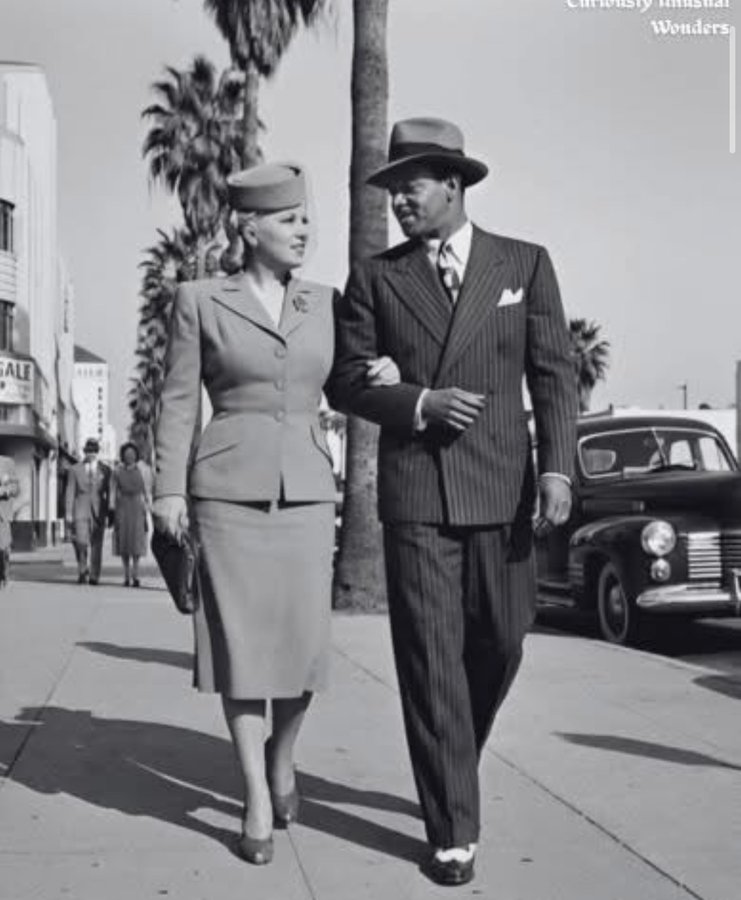
Mae West, Hollywood's most unapologetically sexual woman, walks down a sunlit street beside Albert "Chalky" Wright. The image is simple, unremarkable at first glance. Two people, side by side, caught mid-stride.
But this wasn't a movie set. This wasn't choreographed. And Chalky Wright wasn't playing a part.
He was a featherweight boxing champion. Sharp mind, quiet dignity, fierce loyalty. Hollywood's publicists called him her "driver" when they couldn't avoid mentioning him entirely. The word was a shield, a carefully constructed lie that kept something explosive safely categorized.
Because what existed between Mae West and Chalky Wright was real. And in 1940s America, that reality was more than scandalous. In dozens of states, it was criminal.
Interracial relationships didn't just raise eyebrows. They shattered the foundational racial codes that segregation demanded everyone obey. A white movie star and a Black man, walking together as equals, as companions, as partners. That was rebellion in its purest form.
Mae West had spent her entire career refusing to behave. She wrote her own scripts because male writers couldn't capture her voice. She served jail time in 1927 for her Broadway show Sex. She turned innuendo into art and made censors squirm.
But this was different. This wasn't scripted defiance. This was her life.
When the management of her Los Angeles apartment building informed her that Chalky couldn't come upstairs because Black visitors were prohibited from white residents' floors, Mae didn't protest.
She bought the building.
No debate. No negotiation. Just a transaction that eliminated the barrier completely. Now she owned the space, and no one could dictate who entered it.
That's what power looks like when it's wielded for love. Not grand gestures or public declarations. Just quiet, absolute action that dismantles the obstacle and moves forward.
Chalky never sought cameras or headlines. In 1935, when someone tried to blackmail Mae, he worked directly with police to protect her. No fanfare. No credit. Just loyalty.
They chose each other for decades in a world that made that choice illegal. Mae never confirmed what they were to each other. She didn't owe explanation to systems built to destroy what they shared.
She simply walked beside him. And refused to apologize for it.
Los Angeles, 1943. A photograph exists that studio executives wished had never been taken.
Mae West, Hollywood's most unapologetically sexual woman, walks down a sunlit street beside Albert "Chalky" Wright. The image is simple, unremarkable at first glance. Two people, side by side, caught mid-stride.
But this wasn't a movie set. This wasn't choreographed. And Chalky Wright wasn't playing a part.
He was a featherweight boxing champion. Sharp mind, quiet dignity, fierce loyalty. Hollywood's publicists called him her "driver" when they couldn't avoid mentioning him entirely. The word was a shield, a carefully constructed lie that kept something explosive safely categorized.
Because what existed between Mae West and Chalky Wright was real. And in 1940s America, that reality was more than scandalous. In dozens of states, it was criminal.
Interracial relationships didn't just raise eyebrows. They shattered the foundational racial codes that segregation demanded everyone obey. A white movie star and a Black man, walking together as equals, as companions, as partners. That was rebellion in its purest form.
Mae West had spent her entire career refusing to behave. She wrote her own scripts because male writers couldn't capture her voice. She served jail time in 1927 for her Broadway show Sex. She turned innuendo into art and made censors squirm.
But this was different. This wasn't scripted defiance. This was her life.
When the management of her Los Angeles apartment building informed her that Chalky couldn't come upstairs because Black visitors were prohibited from white residents' floors, Mae didn't protest.
She bought the building.
No debate. No negotiation. Just a transaction that eliminated the barrier completely. Now she owned the space, and no one could dictate who entered it.
That's what power looks like when it's wielded for love. Not grand gestures or public declarations. Just quiet, absolute action that dismantles the obstacle and moves forward.
Chalky never sought cameras or headlines. In 1935, when someone tried to blackmail Mae, he worked directly with police to protect her. No fanfare. No credit. Just loyalty.
They chose each other for decades in a world that made that choice illegal. Mae never confirmed what they were to each other. She didn't owe explanation to systems built to destroy what they shared.
She simply walked beside him. And refused to apologize for it.